
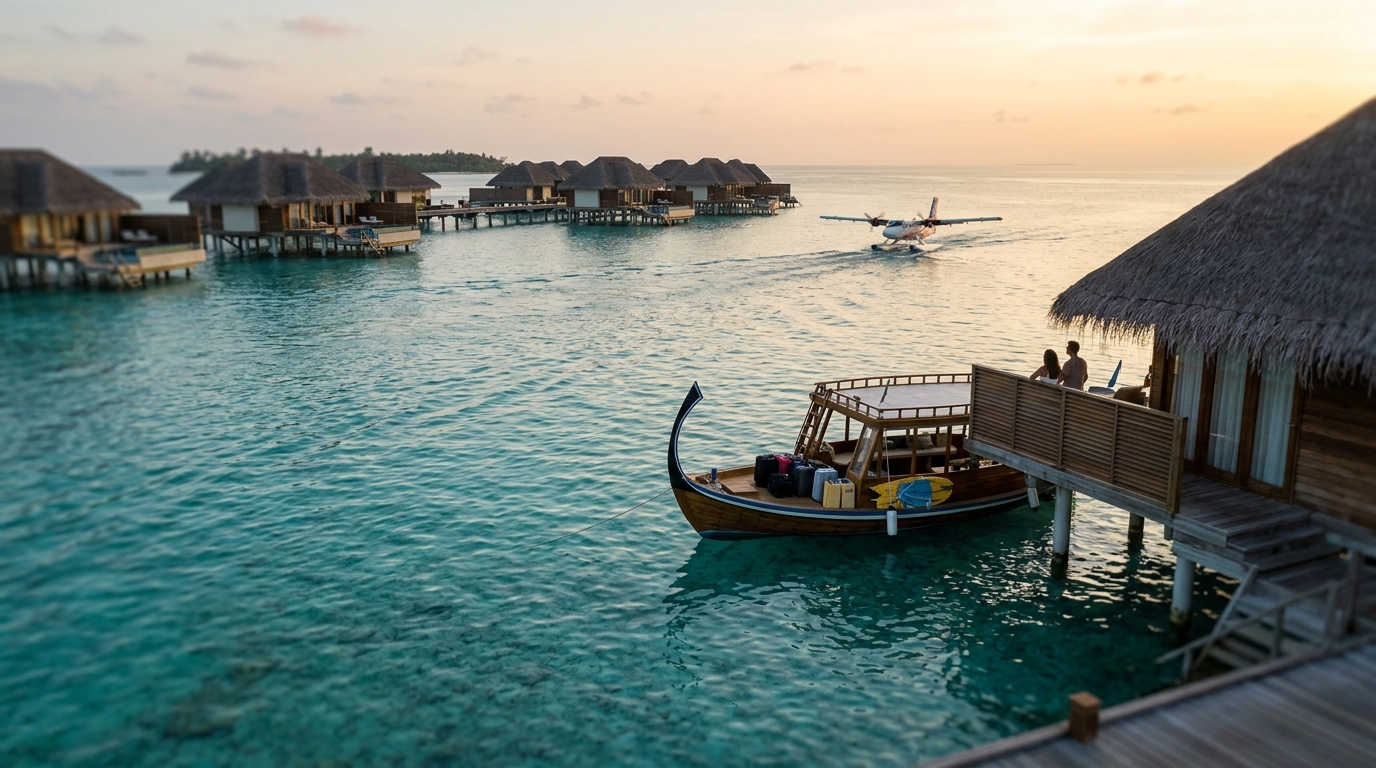
Maldives resort pricing varies significantly across islands and atolls due to logistics, exclusivity, and infrastructure. The primary drivers are the distance from Malé, the mode of transfer, and the specific atoll's regulatory environment. Only5Star analyzes these variables to help travelers understand why two visually similar villas can have vastly different price tags. This guide breaks down the structural reasons behind these cost differences. according to Malosmadulu Atolls Maldives
Transfer Logistics and Infrastructure Costs
The most immediate driver of Maldives resort pricing is the method of arrival. Resorts located close to Malé International Airport typically offer complimentary or low-cost speedboat transfers. These properties benefit from established infrastructure and high guest density, which allows them to offer competitive nightly rates. In contrast, resorts in remote atolls require seaplane or helicopter transfers. Seaplane tickets are a significant fixed cost, often exceeding the nightly rate of the room itself for budget-conscious travelers. This logistical hurdle forces remote properties to position themselves as ultra-luxury destinations to justify the total trip cost. For additional details, review the About Only5Star.
Atoll Regulations and Environmental Levies
Maldives resort pricing is also shaped by the specific atoll in which a resort operates. The Maldives government imposes an Environmental Tax and a Green Tax on all guests, but the base infrastructure costs vary by atoll. North Malé Atoll (Kaafu) is the most developed and accessible, hosting the highest volume of resorts. This competition drives prices down for standard accommodations. South Malé Atoll (Lhaviyani) offers a middle ground with fewer resorts and slightly higher exclusivity. The remote atolls, such as Baa or Ari, have fewer properties, allowing them to command premium pricing for seclusion. Understanding the atoll's regulatory and competitive landscape is essential for accurate budgeting. For additional details, review the Luxury Cruises Expert Guides.
Exclusivity and Villa Density
Exclusivity is a premium product in the Maldives. A resort with 100 villas will generally price its rooms lower than a resort with 10 villas, even if the design is similar. High-density resorts rely on volume to cover operational costs, while low-density private islands rely on exclusivity. For example, a resort in the Baa Atoll might offer a similar overwater villa to one in the North Malé Atoll, but the Baa property may charge 30% to 50% more due to its limited capacity and higher perceived exclusivity. Travelers must evaluate whether the lower price of a high-density resort is worth the trade-off in privacy. For additional details, review the Luxury Honeymoon Guide 2026.
Meal Plans and Inclusive Packages
The structure of meal plans significantly impacts the final cost of a Maldives stay. All-inclusive packages are more common in remote atolls where dining options are limited to the resort itself. In these locations, the all-inclusive rate is often the only viable option, and it includes premium dining and beverages. In closer atolls, half-board or room-only rates are more common, allowing guests to dine off-property if the resort is on a shared island or near other facilities. The cost of food and beverage in the Maldives is high due to import costs, so the choice of meal plan can swing the total trip cost by thousands of dollars. Comparing the per-person cost of an all-inclusive package against the cost of dining out is a critical step in evaluating value.

Seasonality and Demand Fluctuations
Key Takeaways
- Transfer method is the primary cost driver; seaplane transfers add significant fixed costs to remote atoll stays.
- Atoll location determines exclusivity; remote atolls command premium pricing for lower villa density.
- Meal plan structure varies by atoll; all-inclusive is standard in remote locations, while half-board is common in closer atolls.
- Infrastructure costs in North Malé Atoll are lower due to high competition and established logistics.
- Exclusivity is a premium product; low-density resorts charge more for privacy and seclusion.
Frequently Asked Questions
Why are remote Maldives resorts more expensive?
Remote resorts are more expensive due to higher transfer costs, lower villa density, and greater exclusivity. The logistics of supplying these islands are more complex, and the limited number of properties allows them to charge premium rates for seclusion.
Does the atoll affect the environmental tax?
The environmental tax is a flat rate per person per night, but the base infrastructure and operational costs vary by atoll. Remote atolls have higher operational costs, which are reflected in the nightly rate.
Is all-inclusive always better value in the Maldives?
All-inclusive is often better value in remote atolls where dining options are limited. In closer atolls, half-board may be more cost-effective if you plan to dine off-property or limit your alcohol consumption.
How much more do seaplane transfers cost?
Which atoll is best for budget luxury?
North Malé Atoll is generally the best for budget luxury due to high competition and lower transfer costs. However, specific resorts in South Malé Atoll may offer better value during the wet season.
Do wet season discounts apply to all atolls?
Wet season discounts apply to all atolls, but the magnitude varies. Remote atolls may offer smaller discounts because their target demographic is less weather-sensitive. according to Malosmadulu Atolls Maldives
How does villa density affect pricing?
Lower villa density allows resorts to charge premium rates for exclusivity. A resort with 10 villas will generally price its rooms higher than a resort with 100 villas, even if the design is similar.
Conclusion
Understanding the structural factors behind Maldives resort pricing is essential for making an informed booking decision. The atoll, transfer method, and villa density all play a role in determining the final cost. Only5Star provides curated guidance to help you navigate these variables and find the right balance of luxury, privacy, and value for your specific trip.