
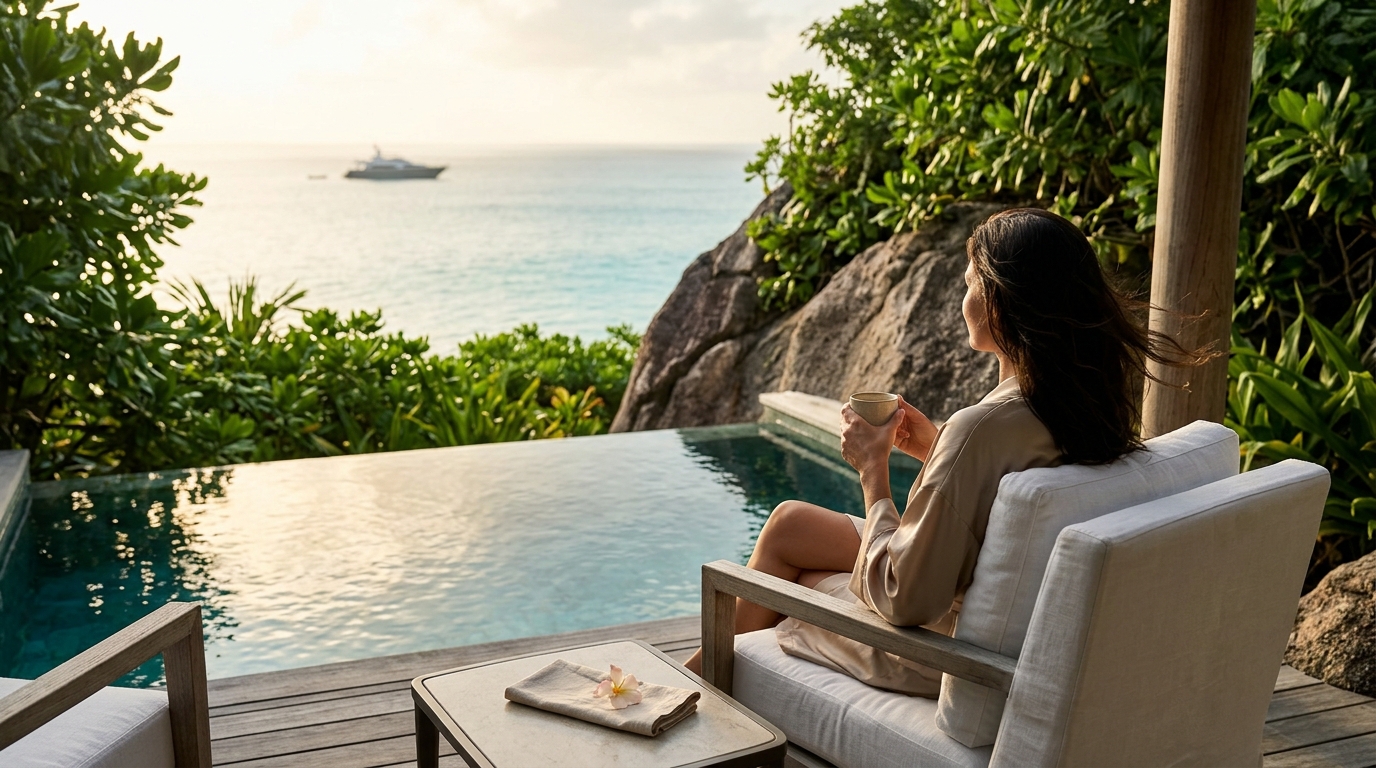
Private resorts protect privacy through physical isolation, strict guest limits, and dedicated staff ratios. Only5Star evaluates these factors to ensure genuine seclusion. This guide explains the operational mechanics that keep you hidden from the public eye. For additional details, review the Luxury 5 Star Hotels.
Physical Isolation and Geographic Barriers
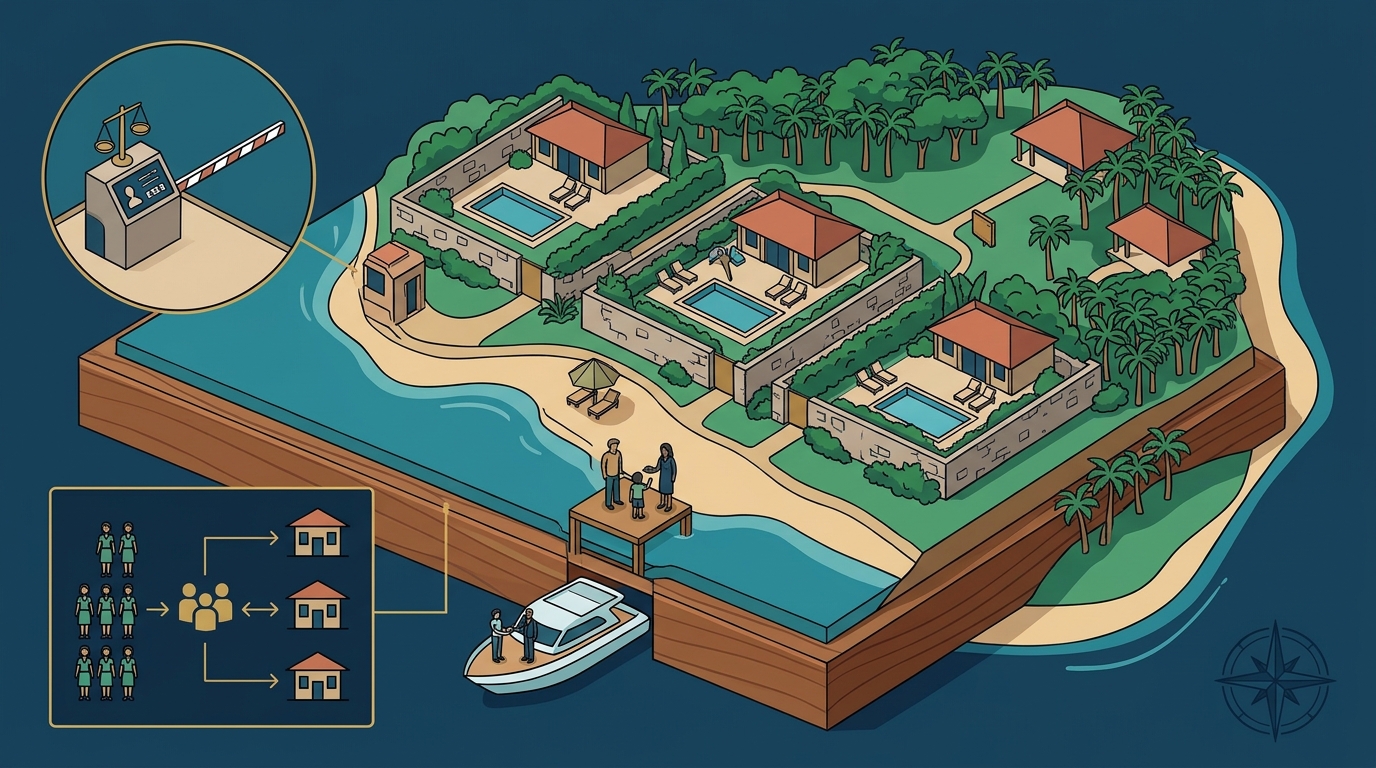
True seclusion begins with geography. A private island resort is a property where the entire landmass is dedicated to a single hospitality brand. This eliminates the noise and foot traffic of shared public beaches. For example, North Island in the Seychelles occupies a 200-hectare private island with only eleven villas. This low density ensures that guests rarely encounter one another outside of scheduled dining.
Geographic barriers also include natural features like cliffs, dense jungle, or deep water. These elements act as physical buffers between the guest and the outside world. When a resort is located on a remote atoll or a secluded cove, the effort required to reach it naturally filters out casual tourists. This creates a quiet environment where the primary audience is the guest, not the public. For additional details, review the Luxury 5 Star Hotels.
Staff Ratios and Anticipatory Service
Service design is the second pillar of privacy. A high staff-to-guest ratio is a metric that measures how many employees are assigned to each guest. In ultra-luxury private resorts, this ratio often exceeds 2:1. This means that for every two guests, there are more than two staff members dedicated to their care. This high ratio allows staff to anticipate needs before they are voiced, reducing the need for guests to interact with service personnel in public spaces. For additional details, review the Luxury 5 Star Hotels.
Anticipatory service means that your preferences are known before you arrive. Staff manage your experience from the moment you land until you depart. This level of attention ensures that you do not need to navigate lobbies, queues, or crowded restaurants. The service model shifts from reactive to proactive, keeping your movements private and your time undisturbed.
Access Control and Entry Protocols
Access control is a security protocol that restricts entry to a property to authorized individuals only. Private resorts implement this through private terminals, dedicated boats, or helicopter pads. For instance, many Maldivian resorts require a seaplane or speedboat transfer that drops guests directly at the resort dock. This bypasses the main airport and public transport hubs entirely.
Once on the property, entry points are monitored. Staff are trained to recognize guests and their entourage. Unauthorized visitors, including media or uninvited guests, are turned away at the perimeter. This controlled environment ensures that your presence on the island or estate remains confidential. It is a physical and procedural barrier that keeps the outside world at a distance. according to This All inclusive
Digital Privacy and Data Protection
Digital privacy is a practice that limits the collection and sharing of personal data. In the context of luxury travel, this means that the resort does not sell your data to third-party marketers. Only5Star prioritizes properties that adhere to strict data protection standards. This ensures that your travel habits and preferences remain confidential.
On-site, digital privacy extends to the use of Wi-Fi and smart room features. Guests can often opt out of data collection in their rooms. This allows you to disconnect from the digital world without compromising your comfort. The resort provides the infrastructure for privacy, giving you the choice to be reachable or completely offline.
Verifying Genuine Privacy Claims
Not all resorts labeled as private offer true seclusion. A private resort is a property that operates independently of a larger hotel chain or shared complex. To verify this, look for the total number of keys. A property with fewer than 50 rooms is more likely to offer genuine privacy than one with 500. Additionally, check if the resort is adults-only or has strict age policies.
Only5Star’s editorial team reviews these details to distinguish between marketing labels and operational reality. We assess the physical layout, staff training, and access protocols. This ensures that the properties we recommend deliver the seclusion they promise. By focusing on these verifiable metrics, we help you choose a stay that truly protects your privacy.
Key Takeaways
- Physical isolation via private islands or remote locations is the strongest form of seclusion.
- High staff-to-guest ratios enable anticipatory service, reducing public interactions.
- Access control protocols, such as private terminals, prevent unauthorized entry.
- Digital privacy practices ensure your personal data is not shared with third parties.
- Verify the total number of rooms to distinguish genuine private resorts from large chains.
- Only5Star curates properties based on these operational metrics to ensure true privacy. according to Privacy
Frequently Asked Questions
What is the difference between a private resort and a private island?
A private island is a landmass owned by a single resort, while a private resort can be a secluded section of a larger property. Private islands offer the highest level of seclusion because no other guests are present.
How do private resorts handle media requests?
Most private resorts have strict no-photography policies in public areas. They often require media to sign non-disclosure agreements and may restrict access to certain areas to protect guest privacy.
Can I have a completely offline stay at a private resort?
What is a typical staff-to-guest ratio in ultra-luxury private resorts?
Ultra-luxury private resorts often maintain a ratio of 2:1 or higher. This means there are more staff members than guests, ensuring that every need is anticipated and met discreetly.
How does Only5Star verify privacy claims?
Only5Star reviews physical layouts, staff ratios, and access protocols. We distinguish between marketing labels and operational reality to ensure that the properties we recommend deliver genuine seclusion.