
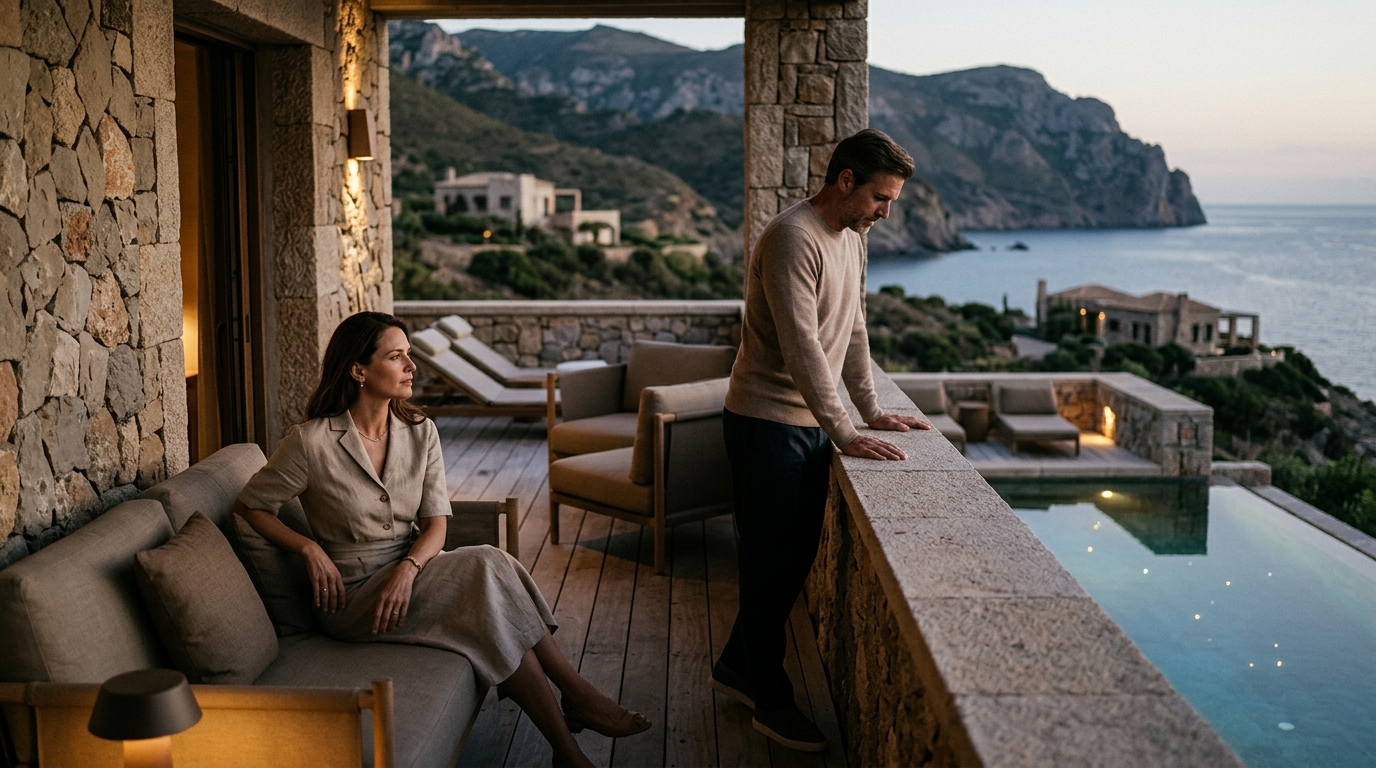
The global luxury hospitality market is undergoing a significant structural shift. According to recent industry data, the demand for ultra-private accommodations has grown by over 40% in the last three years, driven by high-net-worth individuals seeking discretion over opulence. This trend is not merely a fleeting preference but a fundamental redefinition of what constitutes five-star service. Travelers are now prioritizing architectural isolation and bespoke interior aesthetics above traditional amenities like concierge availability or dining variety. This article dissects the critical intersection of privacy and design in the boutique luxury sector, providing a rigorous framework for evaluating these properties.
The Architecture of Privacy
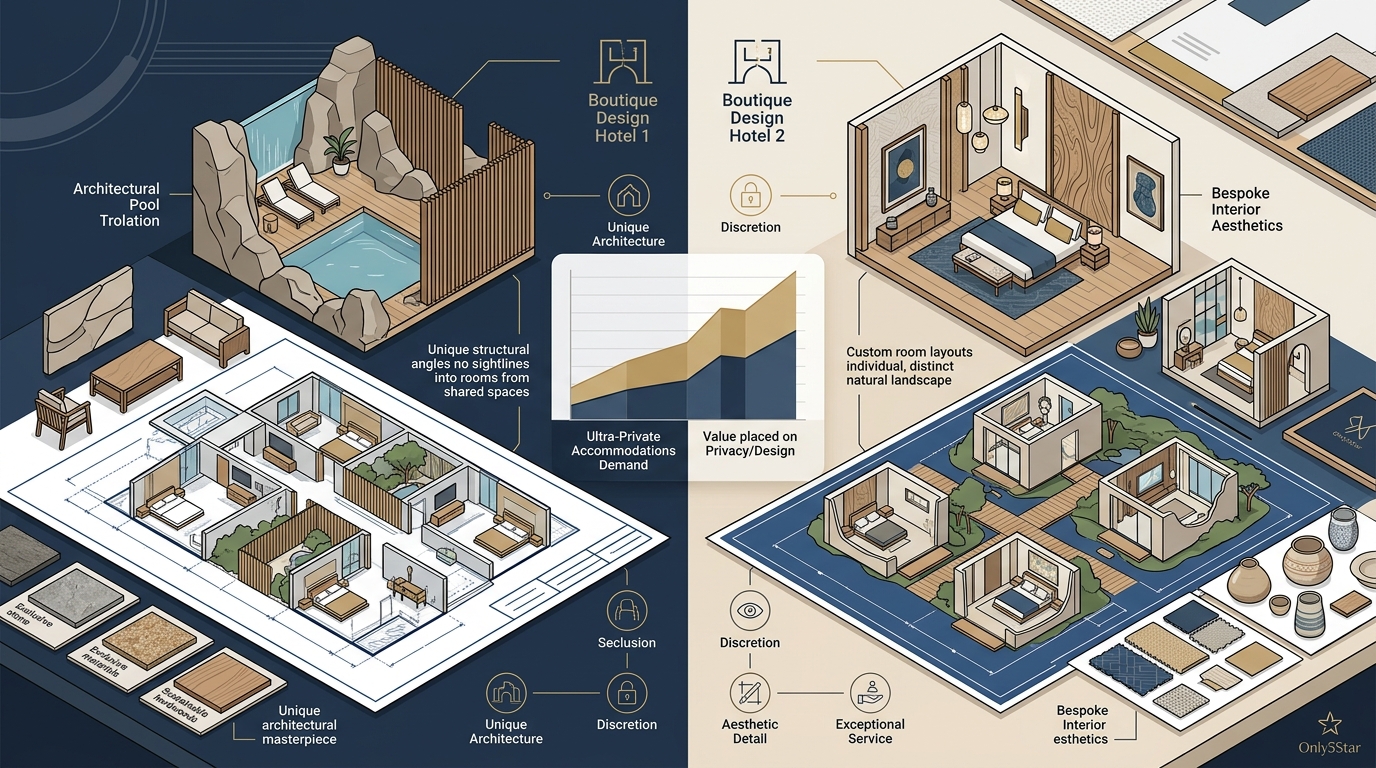
Privacy in boutique hotels is no longer defined solely by locked doors. It is engineered through spatial planning, technological integration, and staff protocols. The most exclusive properties utilize architectural buffering to create physical distance between guest units. This involves strategic landscaping, elevated terraces, and separate entry points that prevent visual contact with other guests or public areas.
Technological privacy is equally critical. Modern boutique establishments implement private Wi-Fi networks for each suite, ensuring that guest data remains isolated from the main hotel infrastructure. Furthermore, soundproofing standards have escalated. High-end properties now use double-glazed windows with acoustic insulation ratings exceeding 50 decibels, effectively silencing external noise and neighboring rooms. This level of acoustic isolation is a primary indicator of true luxury, allowing guests to maintain complete mental detachment from the outside world.
At Only5Star, we evaluate these metrics through our rigorous Curation Methodology. We assess whether a property’s design inherently supports privacy or if it relies solely on operational policies. A building designed with privacy in mind will feature staggered layouts, private gardens, and dedicated elevator access for suites. These structural elements cannot be replicated by staff training alone. They require significant capital investment and architectural foresight.
Design Aesthetics and Materiality
Design in the boutique sector serves two purposes: aesthetic distinction and functional privacy. The most successful properties blend these elements seamlessly. Biophilic design is a dominant trend, where natural materials like stone, wood, and linen are used to create a sense of calm and continuity with the surrounding environment. This approach not only enhances visual appeal but also reduces the feeling of confinement often associated with enclosed spaces.
Materiality plays a crucial role in the perception of luxury. Guests in five-star environments expect tactile richness. This includes hand-carved furniture, custom textiles, and artisanal lighting fixtures. These elements signal that the property has invested in unique, non-replicable assets. In contrast, properties that rely on mass-produced furniture often fail to convey the exclusivity required for a true boutique experience.
Color palettes in high-end boutique hotels have shifted toward muted, earthy tones. These colors reduce visual stimulation and promote relaxation. Bright, contrasting colors are generally avoided in sleeping quarters and private lounges. Instead, designers use subtle variations in texture and shade to create depth without overwhelming the senses. This minimalist approach aligns with the broader goal of creating a serene, private sanctuary.
For a deeper understanding of how we select properties based on these criteria, explore our Destinations guide, which highlights regions where design and privacy converge.
Comparative Analysis Framework
To assist in making an informed decision, we have developed a comparative framework. This table outlines the key differentiators between types of boutique 5-star hotels regarding privacy and design. This analysis is based on industry standards and our internal evaluation of luxury honeymoon resorts and other high-profile properties.
| Feature Category | High-Privacy Boutique | Standard Luxury Hotel | Design Focus |
|---|---|---|---|
| Entry Protocol | Private driveway or separate entrance | Main lobby check-in | Seamless transition from public to private |
| Room Layout | Staggered or detached villas | Corridor-access rooms | Maximized views and isolation |
| Acoustic Control | Soundproofed walls and windows | Standard insulation | Elimination of external noise |
| Interior Materials | Custom, artisanal, natural | Mass-produced, durable | Tactile luxury and uniqueness |
| Technology | Private networks, smart automation | Shared Wi-Fi, basic controls | Discreet integration and security |
As noted in recent hospitality reports, the gap between these two categories is widening. High-privacy boutiques are increasingly incorporating smart home technologies that allow guests to control lighting, temperature, and privacy settings without interacting with staff. This level of automation enhances the sense of control and exclusivity. For more insights on curated experiences, visit our About page.
Key Takeaways
- Architectural Buffering: True privacy requires physical separation, not just operational discretion. Look for staggered layouts and private entrances.
- Acoustic Isolation: High-end properties use advanced soundproofing to ensure silence, a critical component of the luxury experience.
- Material Authenticity: Custom, natural materials signal true boutique status, whereas mass-produced items indicate standard luxury.
- Technological Discretion: Private networks and smart automation allow for control without staff intrusion, enhancing privacy.
- Design Minimalism: Muted color palettes and biophilic elements promote relaxation and reduce visual stimulation.
- Curated Selection: Platforms like Only5Star use rigorous methodologies to identify properties that meet these high standards.
- Market Trend: The demand for privacy is driving a structural shift in how luxury hotels are designed and operated.
Frequently Asked Questions
What defines a boutique 5-star hotel?
A boutique 5-star hotel is defined by its unique design, personalized service, and intimate scale. Unlike large chain hotels, these properties often feature distinct architectural styles and curated interiors that reflect the local culture or a specific theme. They prioritize individual guest experiences over standardized operations.
How can I verify the privacy features of a hotel?
Verify privacy by examining the property’s layout and amenities. Look for private entrances, detached villas, and soundproofing specifications. Reviews often mention noise levels and staff discretion, which are reliable indicators of actual privacy. Our Curation Methodology details how we assess these factors.
Why is design important in luxury hotels?
Design influences the psychological experience of the guest. High-quality materials and thoughtful layouts create a sense of calm and exclusivity. In the boutique sector, design is a primary differentiator, signaling the property’s commitment to quality and uniqueness.
What is biophilic design?
Biophilic design is an approach that incorporates natural elements, such as plants, natural light, and organic materials, into the built environment. This design strategy aims to reduce stress and enhance well-being by connecting guests with nature, even in urban settings.
Are private Wi-Fi networks common in boutique hotels?
Private Wi-Fi networks are becoming increasingly common in high-end boutique hotels. They provide enhanced security and faster speeds by isolating guest data from the main network. This feature is particularly important for business travelers and high-profile guests who require strict data protection.
How does Only5Star select hotels?
Only5Star selects hotels based on a rigorous evaluation of design, privacy, service, and overall experience. We prioritize properties that offer unique, curated experiences rather than standardized luxury. Our team visits each property to verify claims and assess quality firsthand.
What is the difference between luxury and boutique hotels?
Luxury hotels focus on high-end amenities and service standards, often found in large chains. Boutique hotels emphasize unique design, personalized service, and a distinct personality. While both can be five-star, boutique hotels offer a more intimate and tailored experience.
Curate Your Escape
Choosing the right boutique hotel requires a deep understanding of privacy and design nuances. At Only5Star, we specialize in identifying properties that excel in these areas. Our curated list of destinations and luxury cruises ensures that your next trip meets the highest standards of exclusivity and aesthetic excellence. Start your journey by exploring our chat service for personalized recommendations.