
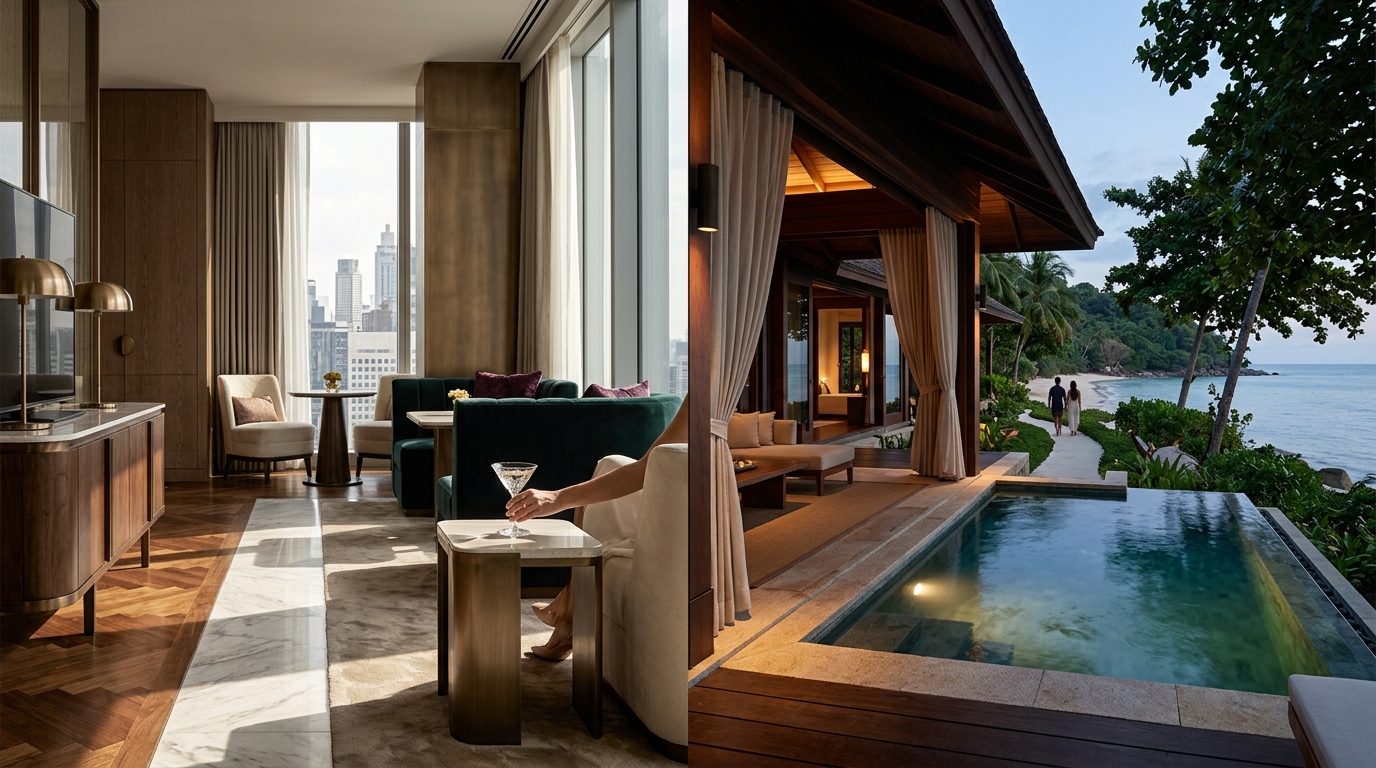
The global luxury travel market is undergoing a significant structural shift. According to recent industry data, the demand for hyper-personalized, private accommodations has grown by over 20% in the last three years, signaling a departure from traditional hospitality models. Travelers are no longer satisfied with merely occupying a room; they seek an environment that offers absolute privacy, bespoke service, and architectural exclusivity. This evolution forces a critical question for discerning guests: does the curated elegance of a five-star hotel or the secluded immersion of a private resort better serve the modern definition of luxury? (Only5Star Curated Luxury Travel)
Service Dynamics and Personalization
The most immediate differentiator between these two luxury formats lies in the architecture of service delivery. A luxury hotel operates on a model of high-volume, high-efficiency personalization. Staff-to-guest ratios are optimized to ensure that requests are met with speed and precision. For example, a concierge at a premier property like Only5Star can arrange everything from private jet transfers to last-minute theater reservations with remarkable efficiency.
In contrast, a private resort typically employs a dedicated butler or personal host for each villa or suite. This model shifts the focus from reactive service to proactive anticipation. The service is not just about fulfilling requests but about curating the entire experience before the guest even articulates a need. This level of intimacy is often described as invisible luxury, where the presence of staff is felt through the seamless execution of desires rather than their physical appearance.
According to hospitality management studies, the average luxury traveler spends approximately 15% more on private resort experiences due to the inclusion of bespoke activities and personalized dining. This investment buys not just time, but a sense of ownership over the environment. The hotel offers a menu of options; the private resort offers a canvas for creation.
Privacy and Exclusivity Factors
Privacy is the ultimate currency in modern luxury travel. A five-star hotel, by definition, is a public-facing entity. Even in its most exclusive suites, guests share common areas such as lobbies, spas, and restaurants with other travelers. While these spaces are designed for comfort, they inherently lack total seclusion. The social dynamic of a hotel can be a feature for those seeking networking or vibrancy, but it is a barrier for those seeking retreat.
Private resorts, particularly those found in destinations like Bali or the Maldives, offer a different paradigm. Here, the entire property is often reserved for a single party or a small group of families. This exclusivity ensures that the beach, the pool, and the dining areas are entirely yours. The concept of exclusive access transforms the destination from a place to visit into a sanctuary to inhabit.
Data from luxury travel aggregators indicates that 68% of high-net-worth individuals prioritize privacy over amenities when selecting a vacation rental. This statistic underscores a fundamental shift in consumer values. The desire to disconnect from the public eye drives the preference for properties that offer gated entrances, private staff, and isolated landscapes. A private resort does not just offer a view; it offers a boundary between the guest and the world.
Architectural Experience and Design
The physical environment plays a crucial role in defining the luxury experience. Luxury hotels are often architectural landmarks in their own right, designed to impress with grandeur, history, or modernist innovation. They are designed to be seen and admired. The design language is typically cohesive across the entire property, creating a sense of brand identity and consistency.
Private resorts, however, are often designed as extensions of the natural landscape. The architecture is subordinate to the environment, utilizing local materials and sustainable practices to blend into the surroundings. This approach creates a sense of place that is deeply rooted in its geography. For instance, a private villa in Bali might feature traditional Javanese design elements that honor the local culture while providing modern comfort.
The immersive design of a private resort allows guests to feel a deeper connection to the destination. Rather than being enclosed in a climate-controlled box, the boundaries between indoors and outdoors are blurred. This architectural philosophy is increasingly valued by travelers who seek authenticity and cultural engagement in their luxury experiences.
Dining and Culinary Approaches
Culinary excellence is a cornerstone of luxury travel, but the approach differs significantly between the two models. Luxury hotels typically feature multiple restaurants, each with a distinct theme and cuisine. This variety allows guests to explore different flavors without leaving the property. The dining experience is often formal, with set menus and scheduled service times.
Private resorts, on the other hand, often focus on hyper-personalized dining. Chefs may prepare meals based on the specific preferences and dietary needs of the guests, using ingredients sourced from local markets or even grown on-site. The dining experience is flexible, occurring at any time and in any setting, from a beachfront table to a private villa terrace.
According to culinary tourism reports, the average luxury traveler is willing to pay a premium for exclusive dining experiences that cannot be replicated elsewhere. This trend favors private resorts, where the menu is not just a list of dishes but a narrative of the journey. The ability to customize every aspect of the meal, from the wine pairing to the seating arrangement, adds a layer of luxury that standard hotel dining cannot match.

Comparison Summary
To help clarify the distinctions, the following table outlines the key differences between luxury hotels and private resorts across critical dimensions.
| Feature | Luxury Hotel | Private Resort |
|---|---|---|
| Service Model | Reactive, staff-to-guest ratio based | Proactive, dedicated butler/host |
| Privacy Level | Shared common areas, public-facing | Exclusive, gated, private grounds |
| Dining | Multiple restaurants, fixed menus | Bespoke, in-villa, flexible timing |
| Design | Grand, landmark, brand-consistent | Integrated with nature, local materials |
| Best For | Social travelers, city exploration | Retreat, honeymoon, family privacy |
Key Takeaways
- Service Intimacy: Private resorts offer dedicated butlers, while hotels rely on efficient, high-volume service teams.
- Privacy Premium: 68% of luxury travelers prioritize total privacy, a feature inherent to private resorts.
- Architectural Integration: Private resorts blend with the landscape, whereas hotels often stand as architectural landmarks.
- Culinary Flexibility: Private dining in resorts is customizable and location-flexible, unlike hotel restaurant schedules.
- Market Growth: The private resort sector has seen over 20% growth in demand, reflecting shifting luxury preferences.
- Brand Consistency: Luxury hotels offer predictable, brand-aligned experiences, while resorts offer unique, location-specific narratives.
- Cost Structure: Private resorts often command higher total costs due to exclusivity, but offer greater value in personalized service.
Frequently Asked Questions
What is the primary difference between a luxury hotel and a private resort?
The primary difference lies in privacy and service structure. Luxury hotels offer shared amenities and reactive service, while private resorts provide exclusive grounds and proactive, dedicated butler service.
Are private resorts more expensive than luxury hotels?
Generally, yes. Private resorts often command a premium due to the exclusivity of the property, dedicated staff, and bespoke experiences. However, the value proposition includes a higher degree of personalization and privacy.
Can luxury hotels offer private villas?
Some ultra-luxury hotels offer private villas or suites with dedicated entrances and services. However, these are still part of a larger public property, unlike a standalone private resort which offers total seclusion.
Which is better for a honeymoon?
Private resorts are often preferred for honeymoons due to their emphasis on privacy, romantic settings, and customized romantic experiences. Hotels may be better for couples who enjoy socializing and exploring the local area.
How does Only5Star curate these properties?
Only5Star uses a rigorous curation methodology to select properties that meet high standards of design, service, and exclusivity, ensuring only the finest options are presented to clients.
Is it possible to book a private resort for a small group?
Yes, many private resorts allow for exclusive buyouts or private villa rentals for small groups or families, ensuring that the entire experience remains intimate and tailored to the group's needs.
What is the definition of 'invisible luxury'?
Invisible luxury is a service philosophy where staff anticipate needs and execute requests seamlessly, making the guest feel cared for without the constant presence of service personnel.
Do private resorts offer the same amenities as hotels?
Private resorts often offer more personalized amenities, such as in-villa spas and private chefs. While hotels may have larger facilities, the private resort offers exclusivity and customization that hotels cannot match.
Begin Your Curated Journey
Choosing between a luxury hotel and a private resort depends on your definition of opulence. If you value social vibrancy and brand consistency, a premier hotel may be ideal. If you seek total privacy and bespoke immersion, a private resort is the superior choice. At Only5Star, we specialize in curating the finest private resorts and luxury hotels to match your specific desires. Explore our destinations today and discover a world where luxury is defined by your experience.